Anyone who buys olives for a business knows that variety and size matter. But there is an earlier decision that shapes almost everything else: whether the olive arrives with the stone, without it, stuffed or cut. That choice affects kitchen preparation time, the look of the dish, waste and the type of customer being served.
It may seem a minor detail, but it is not. A restaurant that buys olives with stones to use in a salad loses minutes at every service. A tapas bar that serves sliced olives as an appetiser disappoints anyone who expected a whole olive. Getting the table olive format right avoids problems that are hard to fix in the middle of the season.
Four formats, four uses
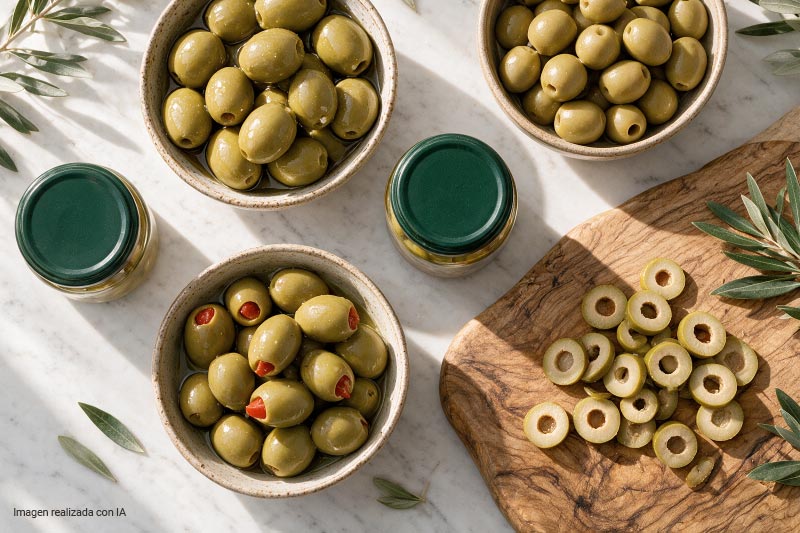
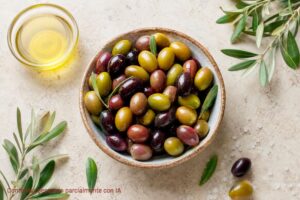
The sector draws a clear distinction between formats. Whole olives keep the stone. Pitted olives lose it but keep their shape almost intact. Stuffed olives are pitted olives filled with one or more ingredients, such as pepper, almond, anchovy or onion. Segmented olives are cut into halves, quarters, wedges or slices.
Each one meets a different need. None is better in absolute terms. What changes is the use it is intended for and the type of operation buying it.
Olives with stones: the classic appetiser
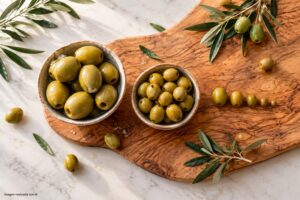
The olive with the stone is the classic choice for the table. Those who prefer it point to its juiciness and the way it encourages slower eating. In a tapas bar, on a terrace or on a nibbles menu, that gesture is part of the experience.
It also has a cost. You have to decide what to do with the stone: provide a dish to leave it in, clear it when the table is cleared, and accept that it is not the best option for preparations where it gets in the way. It works well served as it is and poorly as an ingredient.
For a traditional appetiser business, with customers who look for flavour and an artisan feel, it is a safe bet. For a kitchen with fast service, it is probably not the first choice.
Pitted olives: the ones that work in the kitchen
Without the stone, the olive blends into salads, rice dishes, pasta, breads and sauces with no preliminary steps. For a fast-service kitchen or a caterer preparing many portions, that means less handling and less risk of a stone ending up on the plate.
The pitted olive is also the basis for other formats. Stuffed olives and slices both start from it. If several preparations in your business use olives as an ingredient, it is the most logical starting point.
Its limitation is presentation. Served on its own at the table, it looks less appealing than a whole olive, and some customers associate it with a more industrial product. It is worth bearing this in mind before offering it as the main appetiser.
Stuffed olives: added value without extra work
The stuffed olive solves a specific need: offering an appetiser with its own character without having to assemble it. Pepper and anchovy are the most recognisable fillings, and they are the ones Olives GARCÍA includes in its range of stuffed tins. Customers identify them straight away and need no explanation.
They suit a shop shelf, an appetiser selection or a bar where you want to serve something recognisable and consistent. They add variety to the offer without adding complexity to service.
They make less sense when the olive is going into a recipe. The filling interferes with the flavour of the dish and makes more expensive a raw material that will end up mixed with other ingredients.
Sliced olives: designed as an ingredient
Sliced olives are made by pitting the olive and then cutting it into thin, even slices. Their purpose is practical: they arrive ready for pizzas, salads, sandwiches, sauces or garnishing. Whoever buys them is not looking for an olive to eat, but for an ingredient that spreads its flavour well and can be portioned easily.
They save cutting time in the kitchen and give a more consistent result from one service to the next. In a pizzeria or a sandwich workshop, that consistency shows in the finished product and in the speed of assembly.
What they do not do is work as an appetiser. They lose presence on the table, and a customer who asks for olives expects something else. They are a kitchen resource, not a bar one.
How to decide based on your business
Before choosing a format, it is worth answering three questions:
- Does the olive go on the plate on its own or as part of a preparation?
- How much time and staff are available to handle it?
- What does the end customer expect to find on the table or on the shelf?
| Format |
Best use |
Point to watch |
| With stone |
Appetiser, tapas, table |
Managing the stone in the dining area |
| Pitted |
Kitchen, salads, rice dishes, catering |
Less appealing served on its own |
| Stuffed |
Appetiser with identity, retail, bar |
Interferes with recipes |
| Sliced |
Pizzas, salads, sandwiches, sauces |
Not suitable as an appetiser |
No single answer suits everyone. One business may need two or three formats at the same time.
Two practical examples
Imagine a hotel with a restaurant, a breakfast buffet and an events catering service. At the bar it serves stuffed olives or olives with stones as a complimentary snack with drinks. In the kitchen it uses pitted olives for salads and hot dishes. And at the buffet it can include sliced olives for sandwiches and breads. Three formats, three uses, one supplier.
Now think of a distributor supplying hospitality businesses and small shops. Its priority is not the recipe but stock turnover and ease of replenishment. It needs a range that covers its customers’ most common demands without multiplying products that sit unsold. Here it matters more to offer a balanced range, with whole, pitted and stuffed olives in formats that are simple to store and move, than to get the most sophisticated format right.
The question changes depending on who is buying, but the method is the same: start from real use, not from habit.
What Olives GARCÍA offers
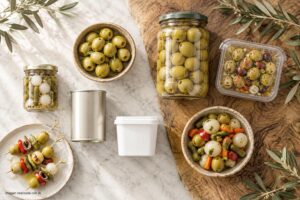
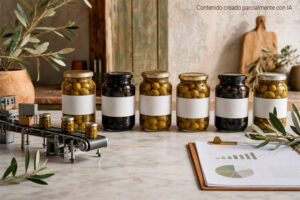
Olives GARCÍA’s range covers several of these needs. The plastic format brings together whole, split and pitted olives, as well as dressed olives, mixes and pickles. The stuffed tins come in pepper and anchovy varieties. For large volumes there are 2.5 kg and 5 kg tins, and the 250-litre container takes every olive and pickle available.
This variety makes it possible to combine formats and packaging according to the type of customer, whether hospitality, hotels, catering, distribution or the food industry. To find out which combination suits your operation, the most useful step is to speak directly to the sales team.
Frequently asked questions
Which olive is best for cooking?
Usually the pitted olive or the sliced one, because they need no prior preparation and blend easily into any recipe.
And for serving as an appetiser?
The olive with the stone or the stuffed one, depending on the customer profile and the image you want to give the service.
Can formats be combined in the same business?
Yes, and it is the usual approach when appetisers and cooking go side by side.
Which format suits a distributor?
The one that turns over best among its customers. A short range of whole, pitted and stuffed olives tends to work better than a very wide one.
How do I know exactly what I need?
Start from the intended use, the staff available and what the end customer expects. With those three pieces of information, the choice usually settles itself.
Choosing well from the start
The format of an olive is not an aesthetic question. It shapes work in the kitchen, the experience at the table and turnover on the shelf. That is why it deserves an informed decision rather than a purchase made out of habit.
If you need guidance in defining the range that best suits your business, the Olives GARCÍA team can help you assess it.